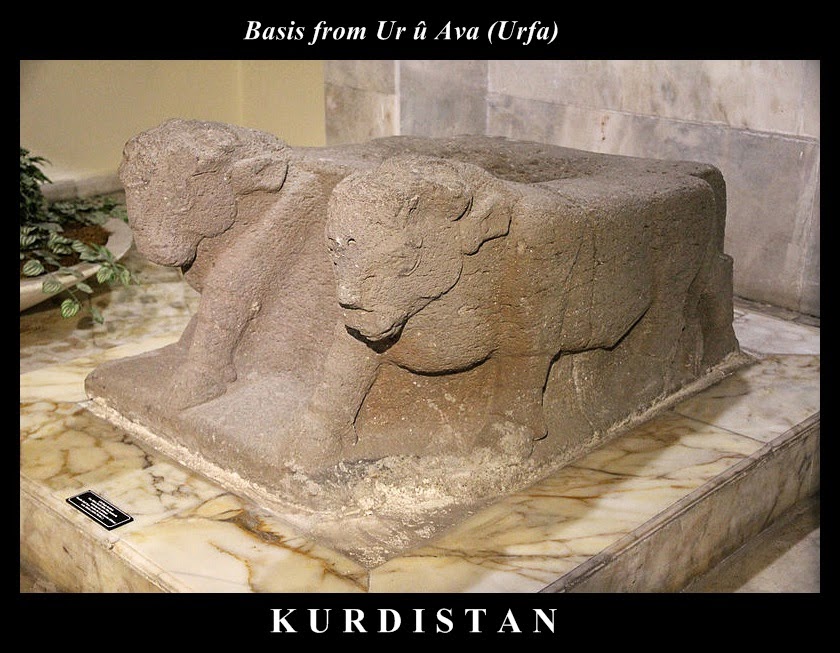
Ancient Kurdish (Median) village/city: Doliche
Eerie Kurdish Cemetery in Batman, northern Kurdistan
UR Û AVA - KURDSIATAN
Kurdish Hattî weather god Stele from Ur û Ava (Urfa) western Kurdistan.
Steles and sculptures from Girê Navokê, Ur u Ava (Urfa)
Newala Çorî, Newala Çorê, Newala Çolê was an
early Neolithic settlement on the middle Euphrates, in Ur u Ava (Urfa)
Province, western Kurdistan. The site is famous for havingsome of the
world's oldest known temples and monumental sculpture. Together with the earlier site of Göbekli Tepe, it has revolutionised scientific understanding of the Eurasian Neolithic.
The settlement was located about 490 m above sea level, in the
foothills of the Taurus Mountains, on both banks of the Kantara stream, a
tributary of the Euphrates.






.jpg)
.jpg)
.jpg)
.JPG)

.JPG)


.jpg)
.JPG)
.jpg)


.JPG)

.JPG)


.jpg)




.JPG)